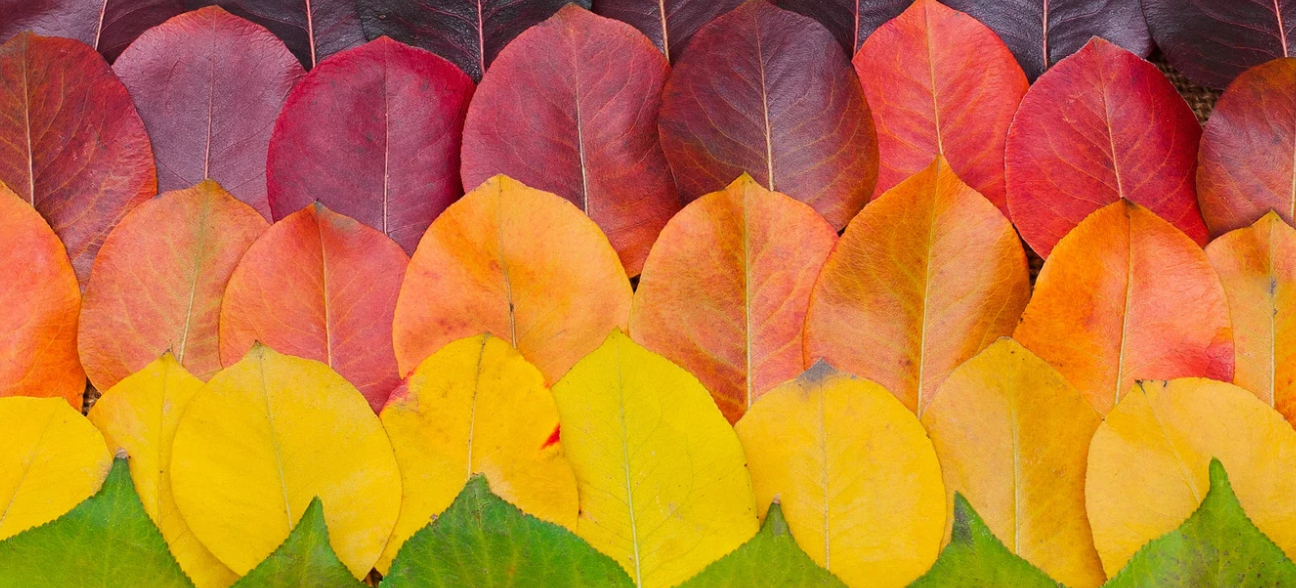
Did you know that one leaf can be many different colours at once? Hidden inside leaves are various colours of pigment that help plants absorb energy from the Sun. Let us uncover these amazing colours with a simple, fun, leaf chromatography bookmark activity!
You Will Need:
Leaves (of different colours)
Rubbing alcohol (isopropyl alcohol)
Coffee filters or thick paper towels (coffee filters work best for a bookmark)
Mortar and pestle or spoon and bowl
Glasses (one for each colour of leaf) or muffin tin
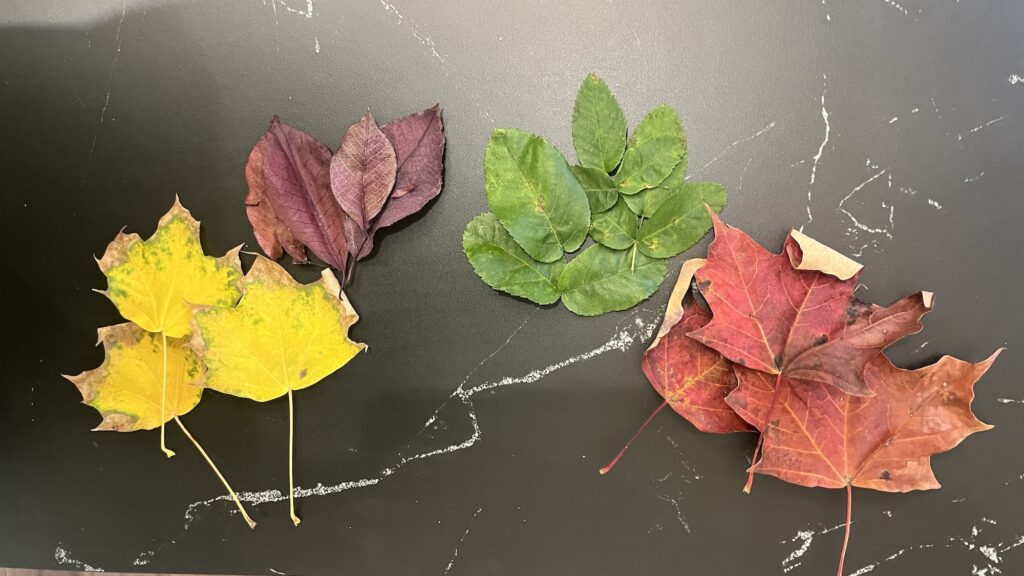
1. Sort your leaves by colour, and choose the best leaf from each group (the one with the most colour).
2. Tear or cut your leaves into smaller pieces.
3. One at a time, place the leaf pieces into your mortar or bowl, then use your pestle or spoon to crush them into a mushy texture.
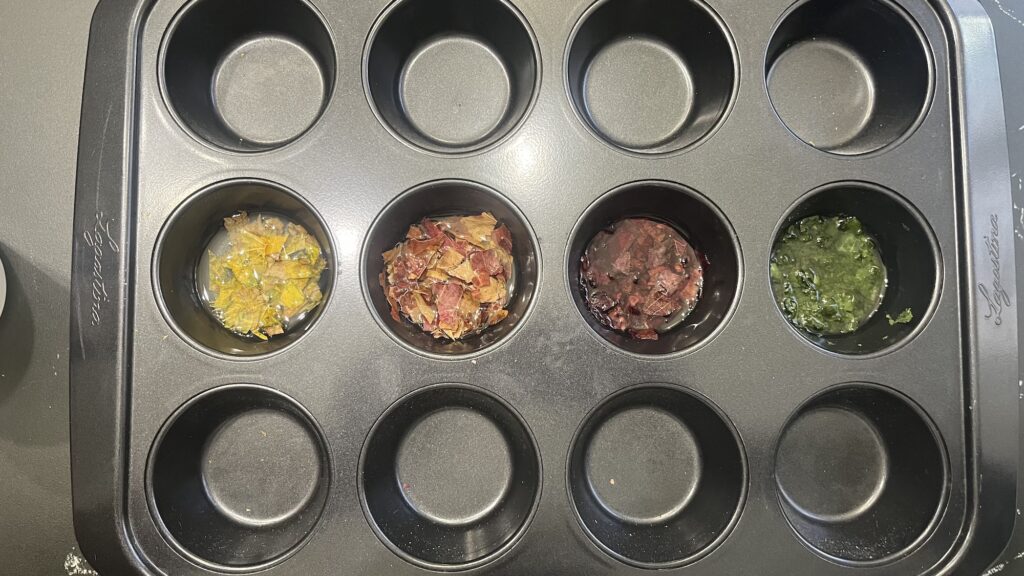
4. For each colour, after they have been crushed, place them in separate glass containers or segments of the muffin tin.
5. Pour rubbing alcohol into each glass until it covers the leaves.
Zoe, preparing her leaves for chromatography.
6. Place all your glasses into your pan or large container.
7. Pour your hot water into the pan or container so it is around (not in!) the leaf glasses.
8. Cover your glasses with plastic wrap and wait 30 minutes (or overnight for the best results!) so the pigments fully dissolve.
9. Cut strips of your coffee filter or paper towel. Try not to make them too thin, and keep them all roughly the same size.
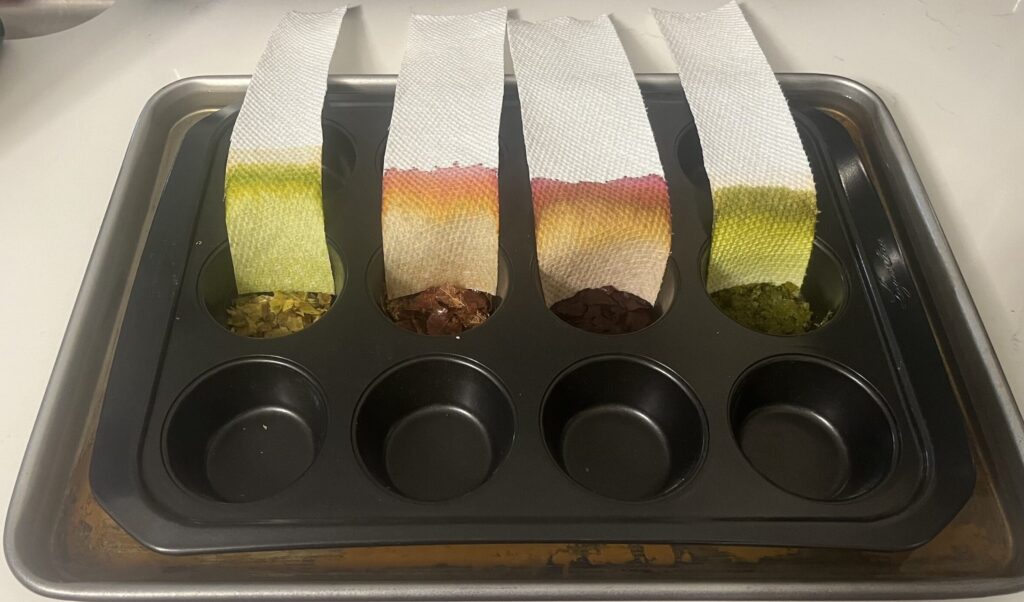
10. Place one edge of a coffee filter strip or paper towel strip into the glass container so it touches the alcohol. Make sure the other edge is outside of the pan/container and isn’t touching water.
11. Wait for the pigments to travel through the coffee filter or paper before removing it from the glass and allowing it to dry (at least 1-2 hours).
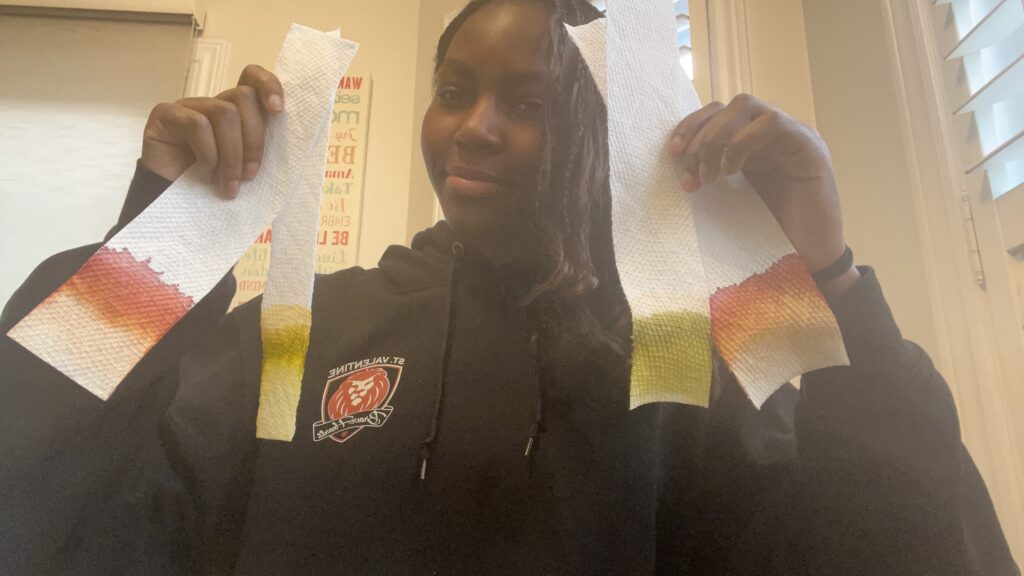
12. Trim the filter/paper to the size and shape of the desired bookmark. Feel free to add extra design elements with markers, pens, pencil crayons, etc.
What’s Happening?
All leaves contain multiple pigmentmolecules (colours): chlorophylls (green), carotenoids (yellows and oranges), and anthocyanins (reds and purples). Chlorophyll is the dominant pigment in most leaves, which is why they are green. But in the fall, when there is less light, chlorophyll breaks down, revealing the other stored pigments.
Crushing the leaves breaks open the plant cells where pigments are stored. When you add alcohol, these exposed pigments dissolve, and their molecules are pulled out of the leaf tissue. Adding heat gives the molecules more energy, helping them dissolve faster. After some time, the alcohol becomes coloured due to the dissolving pigments.
Chromatography, or the separation of the leaf pigments, occurs because the various pigments possess different chemical properties. The alcohol carries the pigments as it climbs up the coffee filter or paper towel. Some stick more strongly to the paper fibres, while others stay dissolved in the alcohol. This is because the pigments have different molecular sizes, shapes, and levels of attraction to the paper versus the alcohol. The result is your amazing pattern (chromatogram), which shows all of the pigments. Even if your leaf was green, you may uncover the hidden yellows, oranges, and reds that were there all along!
About the Author:Zoe is a CAGIS Teen Ambassador and a Grade 11 student. In her free time, she enjoys painting, listening to music, baking, and playing basketball.