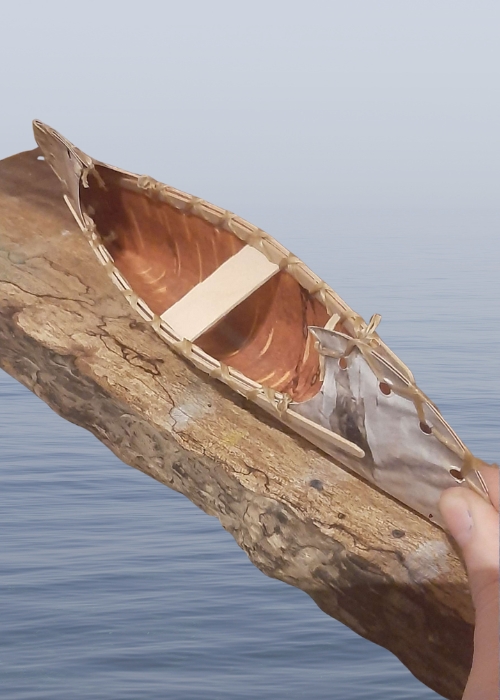
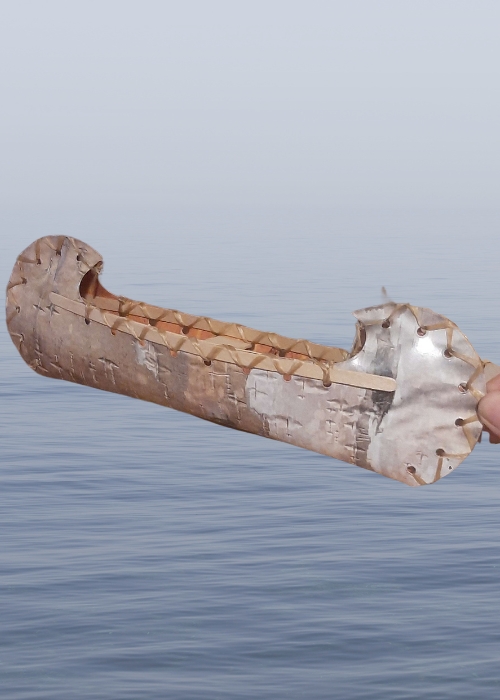
This fall, CAGIS Virtual partnered with John Ferris, a member of Constance Lake First Nation and owner of Ed-Digenous Traditions, a business that integrates traditional art forms and Indigenous Knowledge into education. Using kits from Ed-Digenous Traditions, John guided CAGIS members through an exploration of traditional Indigenous technologies and engineering design. Together, we learned how to apply Indigenous Knowledge to create our own birchbark canoes.
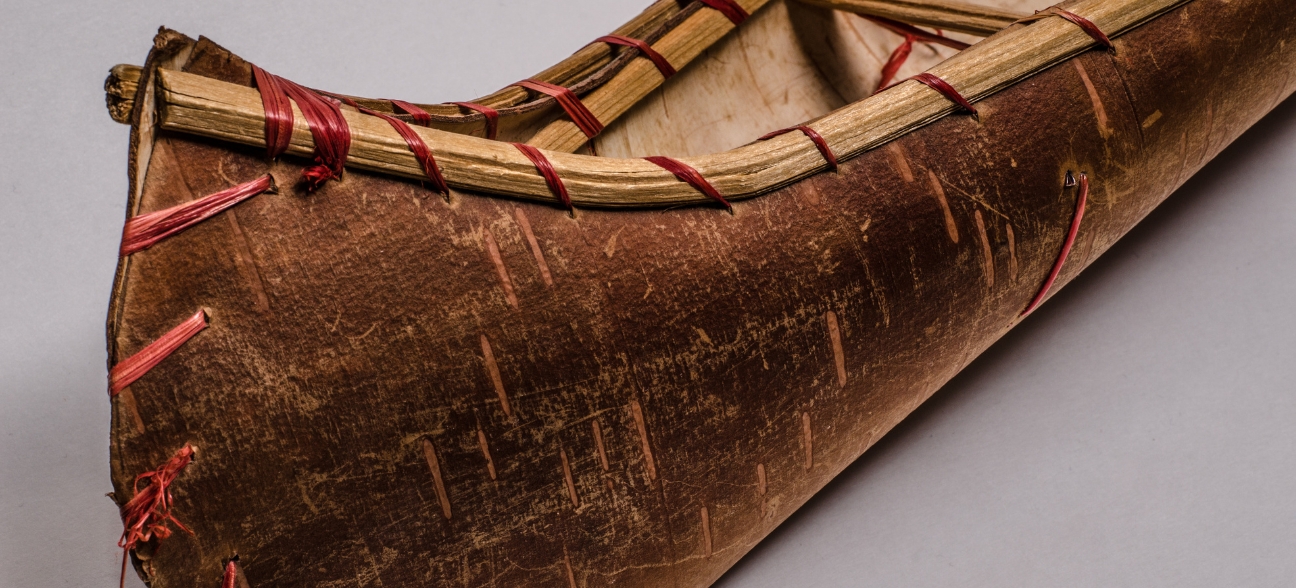
For early Indigenous Peoples, water travel was essential. With no horses or wheeled vehicles on the continent, water was the fastest and most efficient way to cross vast distances. Over time, Indigenous Peoples invented many types of watercraft, but the birchbark canoe became renowned for its speed, strength, and simple construction. Its influence endures—modern canoes are still based on the birchbark canoe’s design.
Read on to hear about CAGIS member Cedar Christensen’s experience building one!
At the end of September, I attended the meeting to build my own birchbark canoe model! The meeting was led by an Indigenous elder who shared stories with us while showing us clear steps so that we could build as he spoke. He talked to us about his experience learning about Indigenous craftsmanship over time. He spent about a month building a small birchbark canoe which I thought was really interesting!
We received a free material kit about a month in advance of the meeting with everything we needed. It came with a stiff piece of paper with birch bark print, a waxed twine mimicking the binding powers of sinew and four wooden sticks to build the structure of the canoe. I wasn’t sure how it was all going to fit together but the picture of the finished canoe and clear instructions really helped! I joined the meeting and learned a lot! I really enjoy engineering and so learning about the Indigenous methods of engineering was really interesting to me!
I am really glad that I had the opportunity to learn more about Indigenous craftsmanship. I found it very interesting that they used mainly naturally occurring waterproof materials to build their canoes, like tree sap and spruce roots. I had a great time and ended up with a model birchbark canoe and more knowledge on Indigenous Canadian engineering than I had before!
About the Author
Cedar Christensen is 14 years old and is an active participant in CAGIS Virtual.