Did you know that one leaf can be many different colours at once? Hidden inside leaves are different pigments that give leaves their colours and help plants absorb energy from the Sun or protect them from excess light. Let us uncover these amazing colours with a simple, fun leaf chromatography activity and turn our results into a bookmark!
You Will Need:
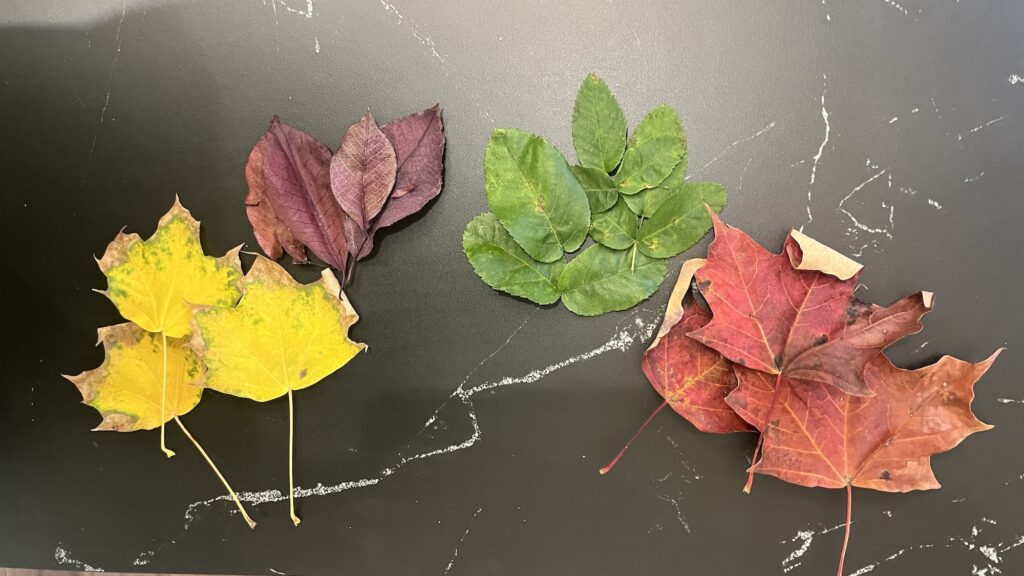
Leaves of different colours
Rubbing alcohol (isopropyl alcohol)
Coffee filters or thick paper towels (coffee filters work best for a bookmark)
Mortar and pestle or a spoon and bowl
Muffin tin (one section for each leaf colour)
Scissors
Baking tray (wide and long enough to fit the muffin tin)
1. Sort your leaves by colour and choose the best leaf from each group (the one with the most colour).
2. Tear or cut your leaves into smaller pieces.
3. One leaf colour at a time, place the leaf pieces into your mortar or bowl, then use your pestle or spoon to crush them into a mushy texture.
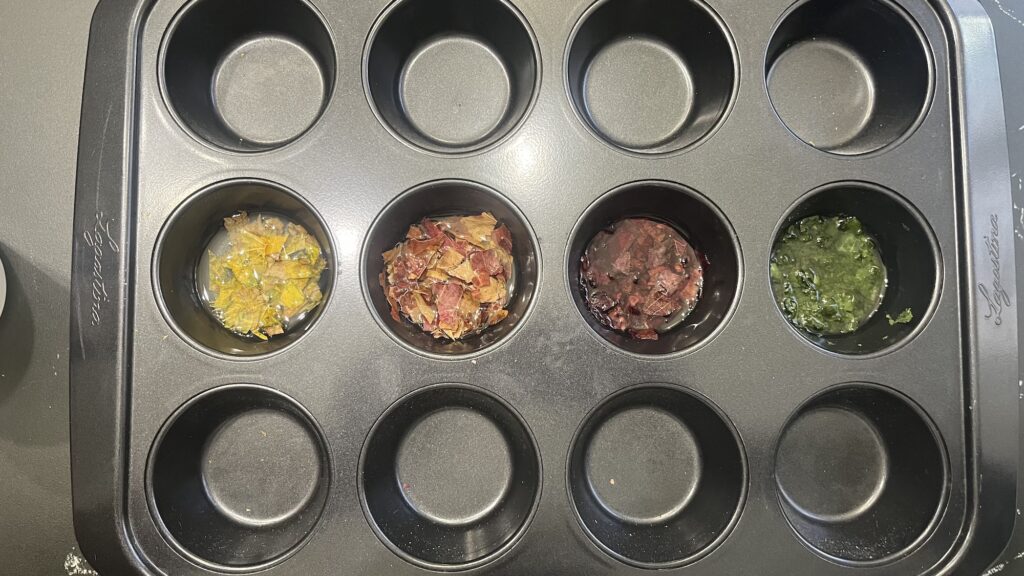
4. After crushing the leaves, place each colour in a separate section of the muffin tin.
5. Pour rubbing alcohol into each section of the muffin tin until it covers the leaves.
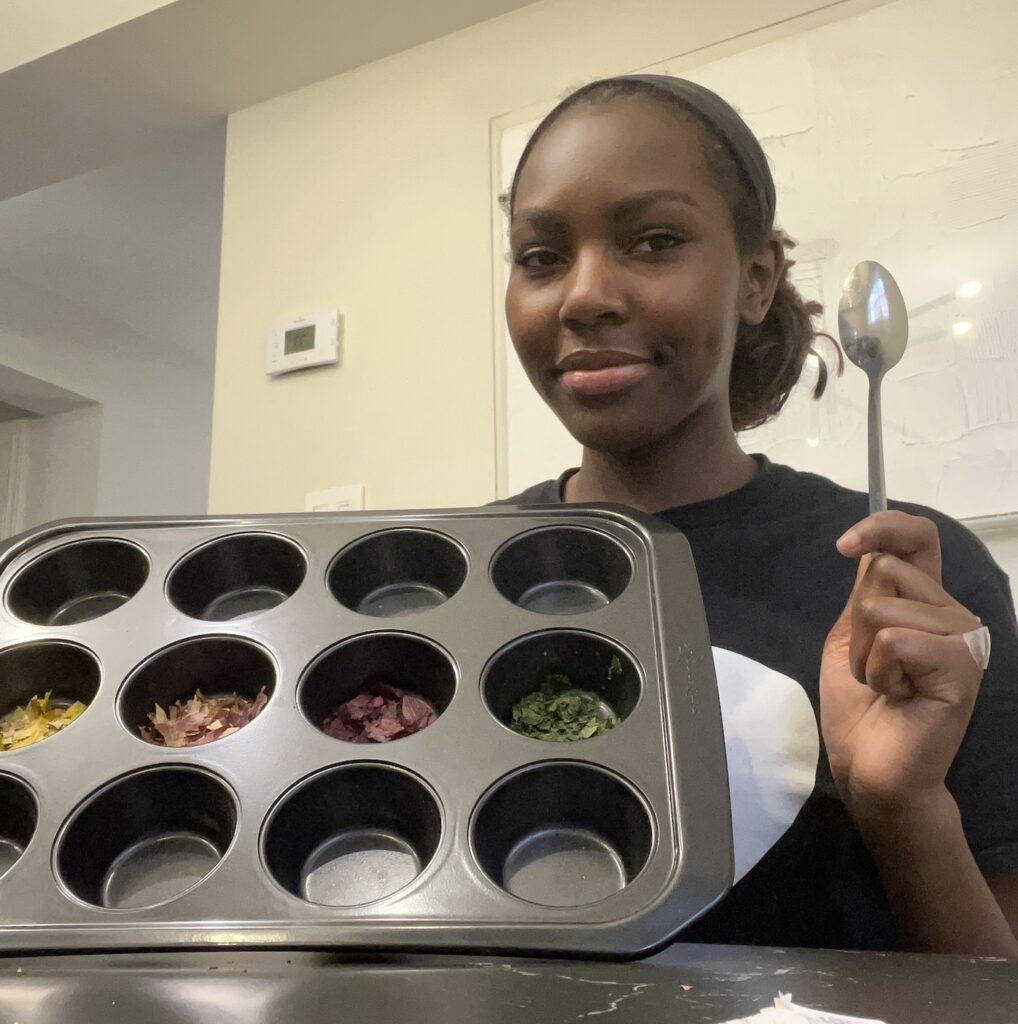
Zoe, preparing her leaves for chromatography.
6. Place the muffin tin on the baking tray and cover it with plastic wrap.
7. Have an adult pour hot water into the baking tray so that it surrounds the muffin tin (but doesn’t get inside!). The muffin tin should be sitting in hot water, but the muffin cups should not have any water in them. Wait at least 30 minutes to allow the pigments to dissolve into the alcohol.
8. Cut your coffee filter or paper towel into strips. Try not to make them too thin, and keep them all roughly the same size.
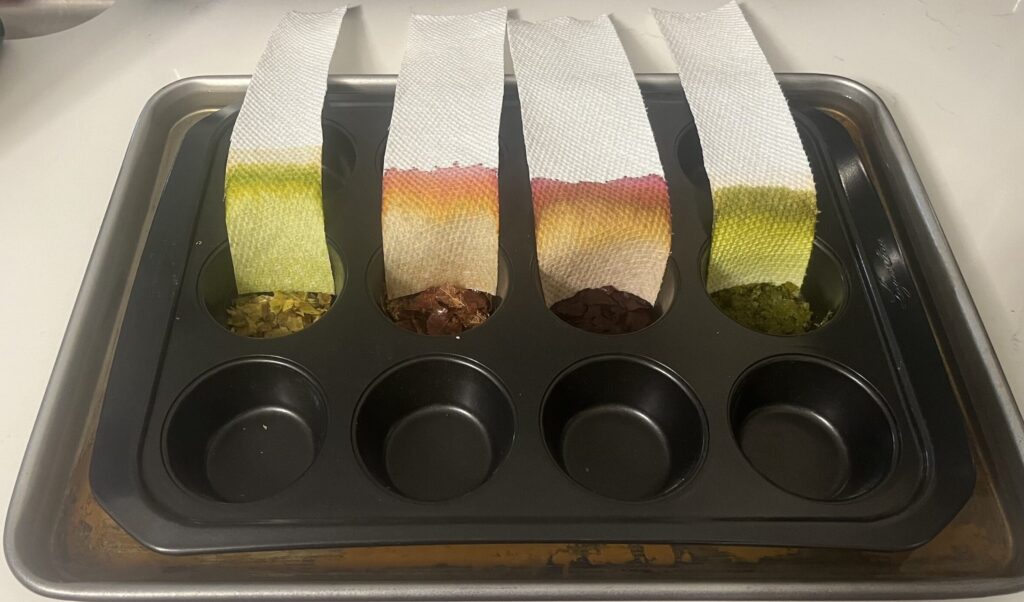
9. Remove the plastic wrap. Place one end of a coffee filter or paper towel strip into a section of the muffin tin so that it touches the alcohol. Make sure the other end hangs outside the muffin tin and baking tray without touching the water. Repeat with the remaining sections of the muffin tin, using a new strip for each one.
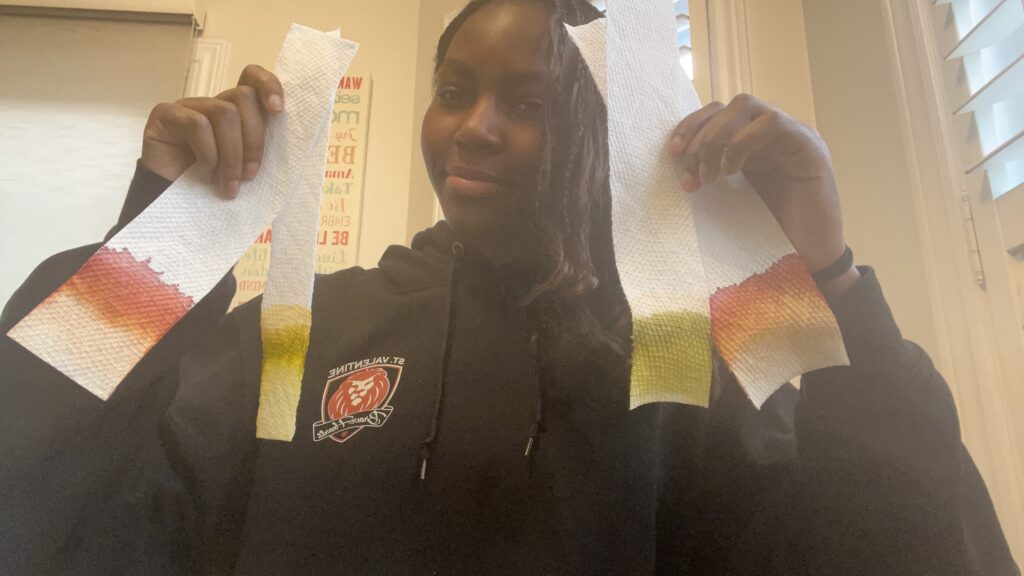
10. Wait for the pigments to travel up the strips, turning the strips different colours. Then remove the strips from the muffin tin and let them dry for 1–2 hours.
11. Trim the strips to your desired bookmark size and shape. Feel free to add extra design elements with markers, pens, pencil crayons, etc.
What’s Happening?
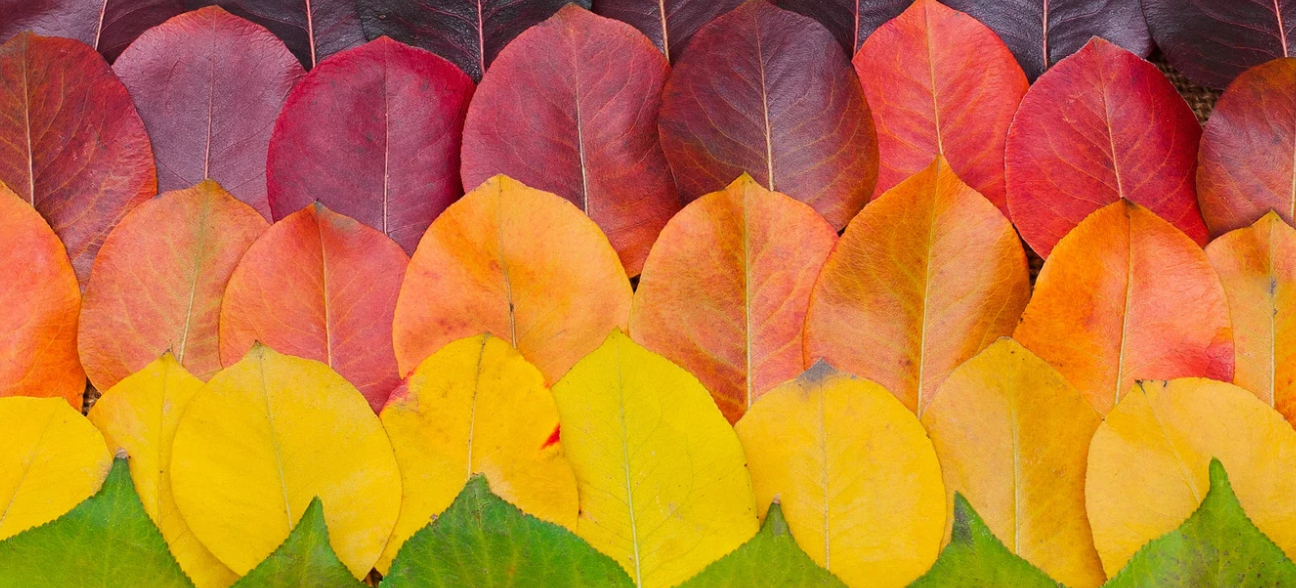
Leaves contain different types of pigments (molecules that give leaves their colours), including chlorophylls (green), carotenoids (yellows and oranges), and sometimes anthocyanins (reds and purples). Chlorophyll is the dominant pigment in most leaves, which is why they are green. But in the fall, as the days get shorter, chlorophyll production slows, and existing chlorophyll breaks down, revealing the yellow and orange pigments hidden underneath. Some leaves also produce new pigments called anthocyanins, which give them their red and purple colours.
Crushing the leaves breaks open the plant cells where pigments are stored. When you add alcohol, some of the pigments dissolve into the alcohol and leave the leaf tissue. Warming the mixture helps this process happen more quickly.
Chromatography is a technique used to separate the different components of a mixture based on their chemical properties. In this activity, we use chromatography to separate the different pigments found in leaves. The alcohol carries the pigments as it climbs up the coffee filter or paper towel. Some stick more strongly to the paper fibres, while others stay dissolved in the alcohol. This is because the pigments have different molecular sizes, shapes, and levels of attraction to the paper versus the alcohol. The result is your amazing pattern (chromatogram), which shows some of the different pigments in your leaf. Even if your leaf was green, you may uncover hidden yellows and oranges that were there all along!
About the Author:Zoe is a CAGIS Teen Ambassador and a Grade 11 student. In her free time, she enjoys painting, listening to music, baking, and playing basketball.