Saturday, May 30, 2026
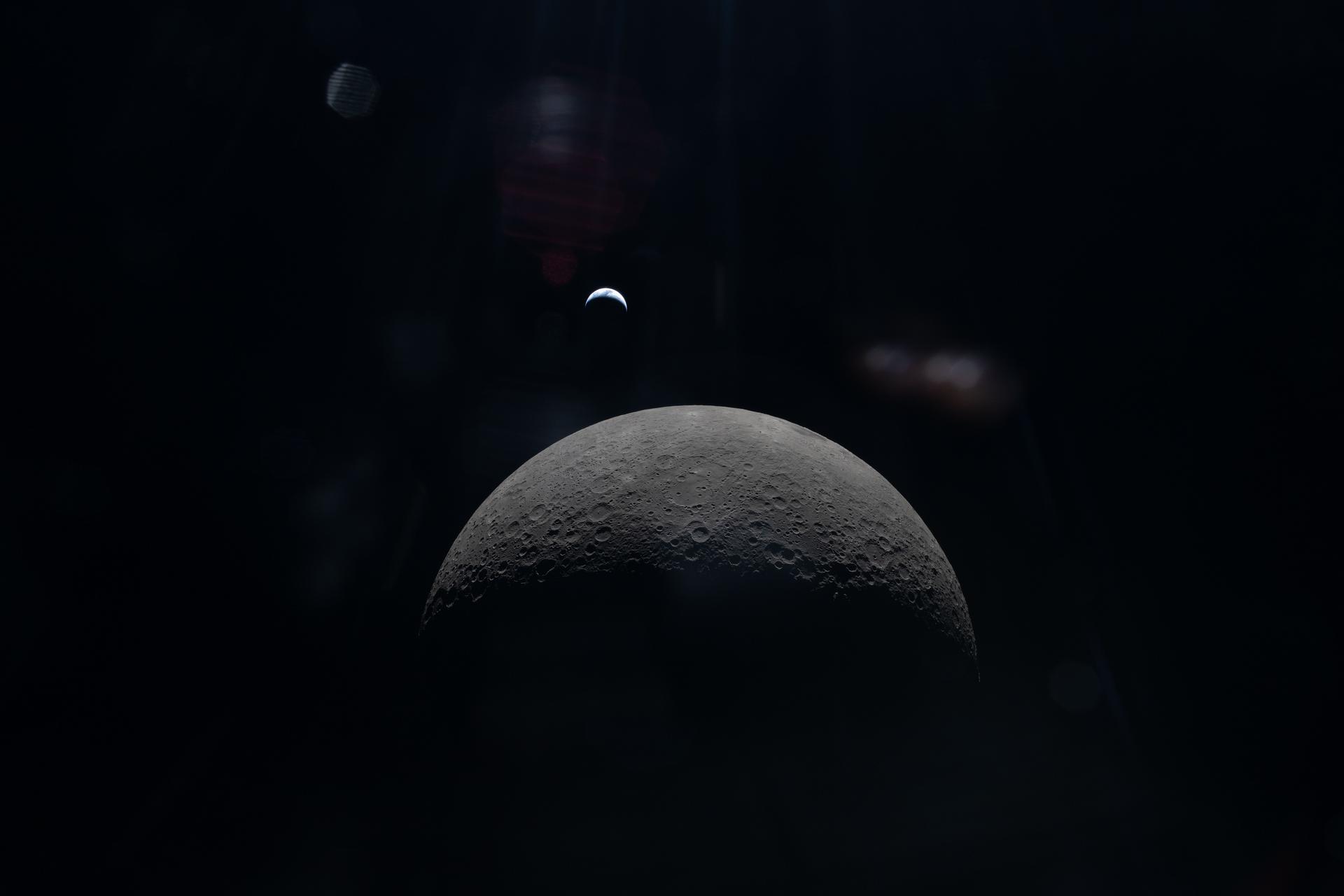
Did you know that astronauts recently flew around the Moon on the Artemis II mission? They saw the dark side of the Moon and named craters that had never been seen before! Have you ever wondered why the Moon has more craters than the Earth? Discover the answer in this out-of-this world session! Explore the surface of the Moon with an astronomer and build your own Moon crater incorporating lunar geologic features! We think you will love this session to the Moon and back!
Image: NASA
Time
Ages 7-12: 8 am PT • 9 am MT • 10 am CT • 11 am ET • 12 pm AT
Ages 13-17: 10 am PT • 11 am MT • 12 pm CT • 1 pm ET • 2 pm AT
Materials and Preparation
- A deep baking tray or plastic container (at least 5 cm deep)
- White flour
- Cocoa powder or cinnamon
- A sifter or sieve
- Impact objects (e.g., marbles, pebbles, or small rocks of different sizes and weights)
-
Plaster of Paris (this is the preferred material for best results and can be found in hardware/craft stores, i.e., Canadian Tire, Walmart, Home Depot, Staples, Michaels)
-
OR flour and white school glue
-
- Water
- A yogurt container or something similar (a disposable cup works here too)
- A piece of cardboard at least 15cmx15cm
- Masking tape or painters tape
- A baking tray
- Aluminum foil, parchment paper, or cling wrap
- A spoon
- Paper towel or paper napkins
- A pencil
- A sharpie
- ½ cup measuring cup
Meet the Expert
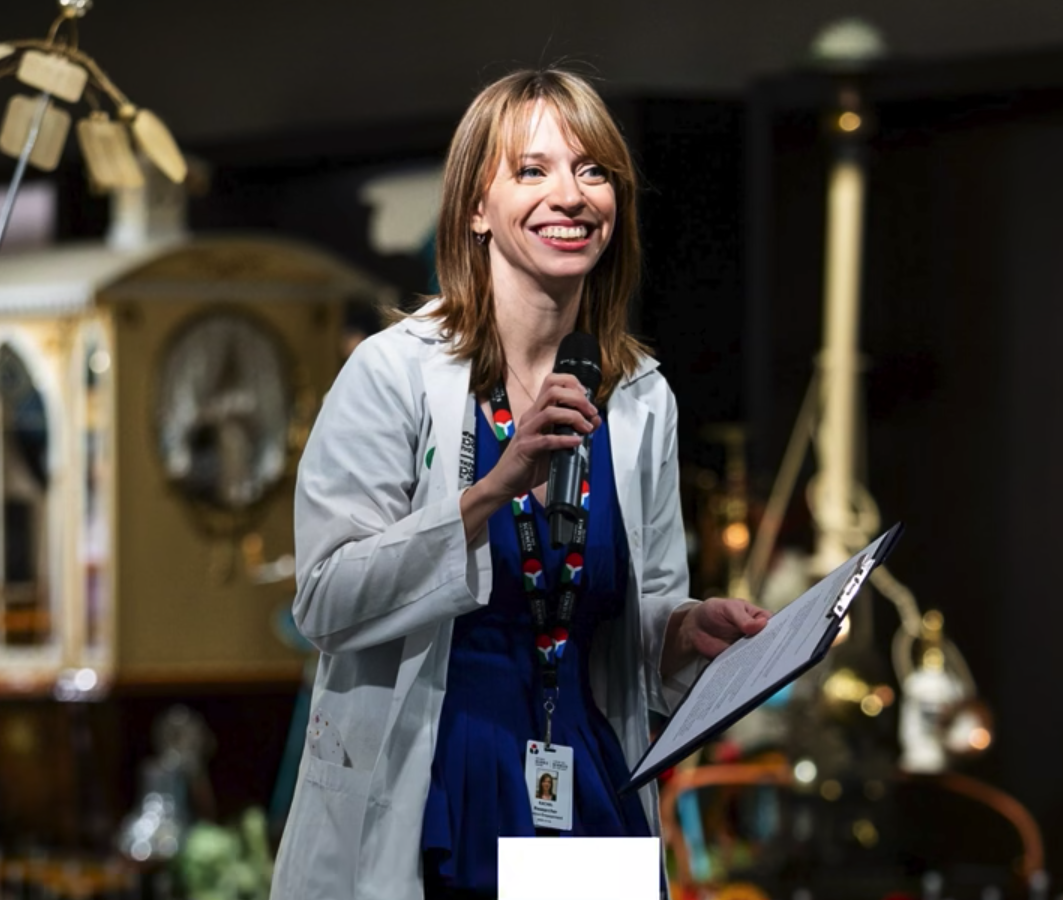
Rachel Ward-Maxwell
For the past 20 years, Rachel Ward-Maxwell has worked as a science communicator and program developer for a variety of organizations, appeared as a content expert on over 100 television and radio broadcasts, and delivered countless tours of the sky, both in-person and virtually, at observatories and planetariums, on-site and online star parties, and sidewalk astronomy events.
Since obtaining her doctoral degree in astrophysics studying the formation of Sun-like stars, she has worked at the Ontario Science Centre in the role of Researcher-Programmer, Astronomy and Space Sciences. In this role, she has developed exhibits and public programs, including planetarium shows and online content, to engage audiences in informal science learning.
She has award-winning leadership and communication skills and has spoken on panels at national and international museum industry conferences about the importance of partnership, inclusion, and science storytelling. Her astronomy expertise and reputation with the public as a leader in outreach and science communication has led to her role serving as the 2nd Vice President of the Royal Astronomical Society of Canada – Toronto Centre, a member of the Let’s Talk Science Alumni Council, and a past member of the Advisory Committee for the Dunlap Institute for Astronomy and Astrophysics at the University of Toronto, as well as invitations to speak at various organizations, including the David Dunlap Observatory and Adler Planetarium in Chicago.
This programming was developed by Rachel Ward-Maxwell and Mikaela Moore.