By Mikaela Ivey-Moore
Meet Mikaela Ivey-Moore at CAGIS
When I was a kid, first I wanted to be a veterinarian, then a dolphin trainer, then an oceanographer, and finally, in my late teens, I discovered science communication. Today, I hold a master’s degree in ocean science and work as a STEM (science, technology, trades, engineering, and math) communicator. I am an outdoor educator at a conservation centre and a project coordinator for CAGIS!
My Journey in STEM
My love of STEM began in my backyard. As a kid, I lived in a rural, remote place where nature was readily at my fingertips. My parents encouraged me to be outside constantly, and I loved exploring the fields, woods, and streams near home. My parents are also scientists, and they encouraged questions and curiosity about our natural world. Naturally, I gravitated towards science.
When I was deciding on my next steps after high school, there were no degrees in science communication, but I learned that to talk about science, I needed to understand it better. First, I completed an undergraduate degree in geology, and then I followed a childhood dream and completed my master’s degree in ocean science.

As I learned more about Earth’s systems, I practiced science communication in many settings, discovering where I enjoyed it most. I interned in the marine invertebrate zoology department at the Smithsonian Natural History Museum; worked at a lake ecology museum; taught invertebrate paleontology as a teaching assistant at a university; helped create episodes for multiple educational geology podcasts; and taught STEM at a science centre.
Each experience taught me new skills for communicating STEM, and strengthened my belief in the power of questions and curiosity.
The Power of a Question
Science communication is about questions and fostering curiosity. Having the answers is great, but it’s important to remember that science wouldn’t exist without questions and the curious minds that ask them.
Curiosity and questions are also my favourite parts of CAGIS Virtual. As a co-coordinator, when I help an expert design a session, I really enjoy thinking about the activities that will spark curiosity and questions. Then, during CAGIS Virtual events, I love listening to the questions CAGIS members ask the experts. There are always questions that lead to more questions, questions that surprise me, and questions that make me curious about a new STEM field.
In CAGIS Virtual, I get to be a beginner again, which is exciting because that is one of the best times to practice letting inquiry lead the way.
What you may not know about me…
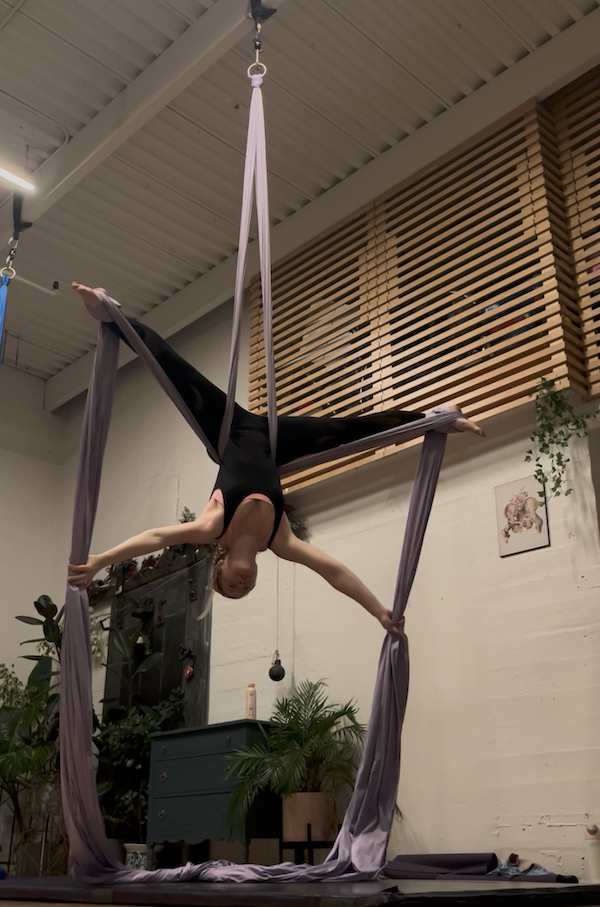
You may have already guessed it, but I love being a beginner! Being a beginner means trying new things, not worrying about being great at something, and asking questions. Some new things I am trying today are acrobatic aerial silks and building tiny houses.
I also teach and practice science communication outside of work. I teach beginner pickleball and recently created my own science communication platform, Tidal Thinking, where Earth and ocean science serve as lenses for an interdisciplinary-science approach to open curiosity about the natural world.

I also got married this past summer, and my wife has actually led a CAGIS Virtual session as a role model in rehabilitation!
My Advice for a Future in STEM:
1. Whenever possible, let curiosity and inquiry lead the way.
2. Try not to predict your path before it unfolds, and be open to new possibilities. You never know what you might be most passionate about.
3. Don’t be afraid to be a beginner and ask questions! There is no such thing as a bad question.